

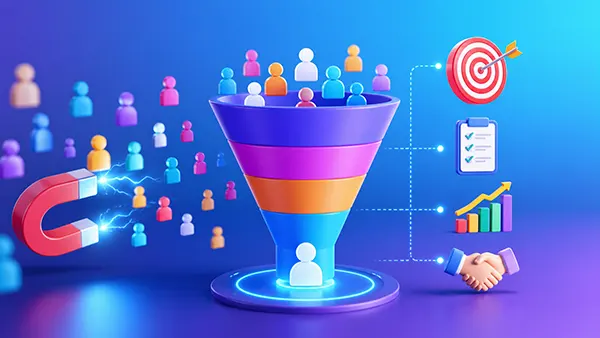
Predictive Lead Scoring in Marketing: How to Identify High-Value Leads Before Sales Contact
Modern marketing teams no longer rely solely on intuition when prioritising leads. With increasing data volumes and shorter sales cycles, businesses need a structured way to identify which prospects are most likely to convert. Predictive lead scoring has emerged as a practical solution, using data analysis and machine learning to evaluate leads before they ever speak to a sales representative. This approach helps reduce wasted effort, improve conversion rates, and align marketing with real business outcomes.
What Predictive Lead Scoring Is and Why It Matters
Predictive lead scoring is a data-driven method used to rank potential customers based on their likelihood to become paying clients. Unlike traditional scoring models that rely on static rules, predictive systems analyse historical data, behavioural signals, and demographic attributes to generate more accurate insights.
In practice, the system evaluates patterns from past conversions. For example, it identifies which characteristics were common among leads that eventually became customers. These patterns are then applied to new leads, allowing marketers to prioritise those with the highest probability of success.
This approach matters because it directly impacts efficiency. Marketing teams can focus their efforts on leads that demonstrate real intent, while sales teams spend less time on low-quality prospects. As a result, companies often see improved ROI and shorter sales cycles.
Key Data Sources Used in Predictive Models
The accuracy of predictive lead scoring depends heavily on the quality and diversity of data sources. Most systems combine several types of data to build a comprehensive profile of each lead.
Behavioural data is one of the most important inputs. This includes website visits, content downloads, email interactions, and session duration. These signals reveal how actively a lead is engaging with the brand and whether they are moving closer to a purchase decision.
In addition, demographic and firmographic data play a crucial role. Information such as company size, industry, job role, and location helps determine whether a lead fits the ideal customer profile. When combined with behavioural insights, these factors significantly improve scoring accuracy.
How Predictive Lead Scoring Works in Practice
The implementation of predictive lead scoring typically begins with data collection and preparation. Historical data from CRM systems, marketing tools, and customer databases is cleaned and structured to ensure consistency. Without reliable data, even the most advanced models will produce weak results.
Once the data is prepared, machine learning algorithms analyse it to identify patterns linked to successful conversions. These algorithms continuously learn and adapt, refining their predictions as new data becomes available. This dynamic nature makes predictive scoring more flexible than rule-based systems.
After the model is trained, it assigns scores to incoming leads in real time. These scores help marketing and sales teams prioritise actions, such as follow-ups, personalised messaging, or targeted campaigns. Over time, the system becomes more precise, improving decision-making across the funnel.
Common Tools and Technologies Used
Several technologies support predictive lead scoring, ranging from specialised marketing software to integrated CRM solutions. Many platforms now include built-in predictive capabilities, making adoption more accessible for businesses of different sizes.
Customer Relationship Management systems often serve as the central hub. They store historical interactions and provide the foundation for scoring models. When combined with marketing automation tools, they enable seamless data flow and real-time updates.
Advanced analytics and AI tools further enhance capabilities. These solutions process large datasets quickly and uncover patterns that would be difficult to detect manually. As a result, organisations gain deeper insights into lead behaviour and conversion drivers.

Benefits and Challenges of Predictive Lead Scoring
One of the main advantages of predictive lead scoring is improved efficiency. By focusing on high-quality leads, teams can allocate resources more effectively and avoid spending time on prospects with low conversion potential.
Another benefit is better alignment between marketing and sales. When both teams rely on the same scoring system, communication improves, and decision-making becomes more consistent. This alignment often leads to higher conversion rates and increased revenue.
However, there are also challenges to consider. Data quality remains a critical issue. Incomplete or inaccurate data can lead to misleading predictions, reducing trust in the system. Additionally, implementing predictive models requires technical expertise and ongoing optimisation.
Best Practices for Effective Implementation
To maximise the value of predictive lead scoring, organisations should start with clear objectives. Defining what constitutes a high-quality lead helps guide model development and ensures alignment with business goals.
Regular data audits are essential. Maintaining clean and up-to-date datasets improves model accuracy and prevents performance decline over time. Companies should also integrate data from multiple sources to create a more complete view of each lead.
Finally, continuous monitoring and refinement are necessary. Predictive models are not static tools; they require регуляр updates based on new data and changing market conditions. Teams that actively manage their models tend to achieve more reliable and actionable results.